Friday, December 23, 2016

Researchers estimate 10,000 metric tons of plastic enter Great Lakes every year

A new study by Rochester Institute of Technology that inventories and tracks high concentrations of plastic in the Great Lakes could help inform cleanup efforts and target pollution prevention.
Researchers found that nearly 10,000 metric tons -- or 22 millionMarine Pollution Bulletin.
pounds -- of plastic debris enter the Great Lakes every year from the United States and Canada. Matthew Hoffman, assistant professor in RIT's School of Mathematical Sciences, is the lead author of "Inventory and transport of plastic debris in the Laurentian Great Lakes," which will run in an upcoming issue of 
"This study is the first picture of the true scale of plastic pollution in the Great Lakes," Hoffman said. Hoffman used computer simulations to follow the volume of plastic debris moving across state and international boundaries -- from Illinois to Michigan and from Canada to the United States.
Earlier studies estimate 40,000 to 110,000 metric tons of plastics enter the oceans along the U.S. coastline, Hoffman said.
In their study, Hoffman and co-author Eric Hittinger, assistant professor of public policy at RIT, report that half of the plastic pollution entering the Great Lakes -- 5,000 metrics tons per year -- goes into Lake Michigan, followed by Lake Erie with 2,500 metric tons and Lake Ontario with 1,400 metric tons. Lake Huron receives 600 metric tons of plastic and Lake Superior, 32 metric tons per year.
Estimates of surface microplastics entering the lakes each year show 4.41 metric tons in Lake Erie, 1.44 metric tons in Lake Huron and .0211 metric tons in Lake Superior.
Plastic pollution in Lake Michigan is approximately the equivalent of 100 Olympic-sized pools full of plastic bottles dumped into the lake every year, Hittinger said, whereas the yearly amount of plastic in Lake Ontario equates to 28 Olympic-sized pools full of plastic bottles.
Prior observational studies measured localized concentrations of plastic pollution in the open water, tributaries and along the shorelines. The new study applied mathematical modeling for the first time to extend the scope of the problem over time and spatial scales.
The inventory gives full mass estimates on the entire connected lake system and maps plastic debris moving between lakes and across interstate and international borders. The results provide environmentally realistic concentrations of plastic in the Great Lakes.
Findings of the study show debris travels differently in the Great Lakes than in the ocean. Instead of the floating "garbage patches" found in the ocean, plastic in the Great Lakes are carried by persistent winds and lake currents to the shore -- often washing up in another state or country, Hoffman said.
Plastic accounts for approximately 80 percent of the litter on the shorelines of the Great Lakes. The study quantifies dense plastic that quickly sinks and surface plastics like microbeads, fragments and pellets, plastic line and Styrofoam, which could be consumed by wildlife and potentially enter the food chain.
Major population centers are the primary sources of plastic pollution in the Great Lake system, with Chicago, Toronto, Cleveland and Detroit releasing more plastic particles than accumulate on their shorelines.
"Most of the particles from Chicago and Milwaukee end up accumulating on the eastern shores of Lake Michigan, while the particles from Detroit and Cleveland end up along the southern coast of the eastern basin of Lake Erie," Hoffman said. "Particles released from Toronto appear to accumulate on the southern coast of Lake Ontario, including around Rochester and Sodus Bay."
Estimates of plastic pollution throughout the Great Lakes were derived using population dynamics within 100 kilometers, or 62 miles, of the shores and hydrodynamic modeling to simulate the distribution of plastic debris throughout the Great Lakes from 2009 to 2014. Data from the National Oceanic and Atmospheric Administration Great Lakes Coastal Forecast System were used to simulate currents transporting plastic debris throughout the lake system.

Story Source:
Materials provided by Rochester Institute of Technology. Original written by Susan Gawlowicz. Note: Content may be edited for style and length.

Sunday, December 18, 2016

These 25 Creatures Used To Roam The Earth… And Are Mind-Boggling

Paleontologists, scientists and other researchers have collected enough samples over the years to form some pretty solid theories about what kinds of creatures used to roam this earth. If you’ve ever seen Jurassic Park or have been to a natural history museum, you’d know that life here used to consist of three things: huge monsters, dangerous plants and quick deaths. These 25 creatures used to roam the very ground you walk on today. You’ll be so glad they aren’t around any more…

1.) Microraptor: Its name means “one who seizes.” It was a very small dinosaur and paleontologists have long debated the use of its four wings.

One Species of Microraptor Had Black Feathers


2.) Nyctosaurus: This ancient genus of Pterorsaur was found in the Mid-western sections of the US. The name means “naked reptile.”
Nyctosaurus by HaughtyFlaki 

 
3.) Opabinia: This is one of the strangest creatures that ever lived. It had 30 flippers, 30 legs, a trunk-like nose and one lobster claw.

 
Picture from: Western Carolina University
4.) Phorusrhacidae: People know this creature as the “terror bird.” It was one of the largest predatory birds that ever lived and could run at speeds up to 40mph.

5.) Pterodaustro: Also known as the Pterosaurs, it had a wingspan of 4 feet. It’s bristle-like teeth implies it probably fed on a diet of plankton and small crustaceans.
Pterodaustro

6.) Quetzalcoatlus: This was the largest pterosaur in the sky, as big is a common African giraffe. Its wingspan was 30 whole feet.
 
Size comparison of Q. northropi (green), Q. sp (blue), and a human

7.) Sharovipteryx: Ths gliding reptile, found in Central Asia, was about one foot long. It would feed on insects and wasn’t capable of powered flight, it would just glide

Sharovipteryx on a glide

8.) Stethacanthus: A type of extinct prehistoric shark, they would grow up to 6 feet long with a strange looking back growth on males.

CGTPL Stethacanthus

9.) Tanystropheus: Its name means “long necked one” and the prehistoric reptile was easily over 20 feet long.
Tanystropheus by PaleoGuy

10.) Therizinosauridae: Or “reaper lizard,” may have been found in Mongolia, China, and the United States. Because they had long necks, pot bellies, four-toed feet, and beaky mouth, scientists weren’t sure if their parts belonged to one creature or several.
Therizinosauridae

11.) Archaeopteryx: The “first bird” supposedly existed during the Jurassic period, discovered in Germany in 1861.

Archaeopteryx artwork

12.) Deinocheirus: There are only a handful of fossil remains of this creature, including two forelimbs and some vertebrae. Its name means “terrible hands.”

13.) Deinotherium: The “hoe tusker” resembled a modern day elephant and were discovered at major hominid extinction sites at Lake Turkana in Kenya.

14.) Dimorphodon: This flying creature had two distinct types of teeth in its jaw. It had great eyesight and huge claws for hunting.

15.) Dunkleosteus: Or “Dunkle’s bone,” was one of the largest armored jaw fishes that ever existed. It was one of the fiercest predators in the ocean. It could be up to 10 meters long and weighed 3.6 tons.

16.) Elasmosaurus: This creature could be up to 46 feet in length (with most of its length in its neck). Its neck was 4x larger than a giraffe’s.

17.) Epidendrosaurus: This was the first reptile to be closer ro a bird than a dinosaur. It was about 6 inches long, with clawed hands on its arms/wings.

18.) Epidexipteryx: These small, feathered dinosaurs were found in the Inner Mongolia region of China. Their large display feathers were the earliest known representation of ornamental feathers in the fossil record.

19.) Hallucigenia: A relative of modern arthropods, Hallucigenia is a strange creature only 3 millimeters long. It has a bulbous round head connected to its cylindrical trunk. It was an ancestor of today’s velvet worms.

20.) Helicoprion: Also known as “spiral saw,” this shark-like cartilaginous fish appeared in the late Carboniferous era. The only evidence of its existence was a curled-up coil of triangular teeth. Some scientists think that it was used to grind shells, while others believed it to be a weapon.

21.) Jaekelopterus: This sea scorpion was massive, at an estimated length of 2.5 meters. It was one of the largest arthropods ever discovered. It supposedly STILL exists in present day freshwater rivers and lakes in Germany.

22.) Josephoartigasia: This capybara-like animal was the biggest rodent on the planet, weighing up to 1000kg.

23.) Liopleurodon: This marine predator lived on a diet of fish, squid, and other sea reptiles. It was bigger than a sperm whale and its skull was nearly 1/4 of its body, filled with many smooth teeth.

24.) Longisquama: This creature was known as the first archosaur to have been able to glide or parachute. It is known for its elongated pair of scales along its back, with the anterior ones resembling feathers.

25.) Megalania: Otherwise known as the giant ripper lizard, it fed on a diet of mammals, snakes, other reptiles, and birds. A modern day relative would be the Komodo dragon that inhabits the Flores Islands in Indonesia.

Tuesday, December 6, 2016

Forest rights and wrongs

Social activists and wildlife groups must acknowledge that no rights can be championed, nor wildlife saved, if the forests at the centre of the tussle vanish
The situation is equally distressful in states such as Maharashtra, Jharkhand, Chhattisgarh, Madhya Pradesh, Bihar, Orissa and Andhra Pradesh.
Soon after daybreak, driving through the forests of Sonitpur district in Assam in late 2005 we made a quick U-turn when a herd of around 15-20 elephants, young ones in tow, emerged from the forest to forage right next to the road leading to the fishing camp at the Nameri Tiger Reserve. The night before, we watched as elephants raided paddy stocks in a village near Balipara, unafraid of the mashaals (fire torches), drums and yells of the distressed villagers. Even as we turned, the matriarch followed our vehicle for 20 metres or so, trumpeting protectively from around 30 metres to make sure we got her message loud and clear.
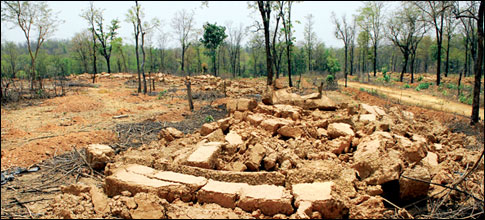
I know this part of India well and before my eyes, I have seen some of India’s most precious forests sacrificed to satiate political expediency using mistaken notions of tribal rights as a fig leaf to exchange land for votes. On a site visit to the same area 10 years later, I found myself speechless at the sheer destruction. In a decade, virtually the entire standing forest on the right bank of the Jiya Bharoli river had vanished. In its place were sparse mustard fields and scattered tree stumps that spoke of once-tall hardwoods whose trunk girth would have been three or four metres at the very least.
Similar stories unfold across vast areas of Sonitpur. We had predicted such disaster when the Forest Rights Bill was being debated way back in 2004-05. We asked, at the very least, a consensus be arrived at that individual rights not be included. A leading NGO, Kalpavriksh, amongst the most vociferous supporters of the flawed FRA, agreed with us in principle but went forward with other groups who threw such suggestions to the wind. Today, much too late, Kalpavriksh agrees that a site-specific amendment to Section 3 (1) of the Forest Rights Act (FRA), 2006, should have been made in Sonitpur to roll back the 2005 cut-off date to 1980, “in consonance with the Forest Conservation Act.” Subsequent to that admission, no further action was taken.
As we have seen happen time and again with urban slum rehabilitation and regularisation schemes, the horse had bolted. The barn door was never shut. What ails the FRA?
To begin with, the Act was intended only for tribal communities, but this was later extended to all forest “dwellers”. Second, individual rights trumped community rights which is evident from the statistics taken from the website of the ministry of tribal affairs from the report on FRA implementation. According to these statistics, people are predictably keen to claim individual rights as this enables them to encash real estate and other financial opportunities. Third, no time limit was definitively set. Had a cut-off date been effectively applied, we would not be in a position where even today “deforest, encroach and claim rights” continue unabated because gram sabhas would have finalised all rights within two years. And the date was 1980 in the first version of the bill.
Here is what the learned Supreme Court judges had to say in an order passed in response to Writ Petition(s)(Civil) No(s) 109/2008 and 50/2008.
“Mr Shyam Divan, learned senior counsel for the petitioner placed before us certain statistical data which indicates that as on September 30, 2015, approximately 44 lakh claims for recognition of the rights under the above-mentioned Act and grant of pattas came to be filed before the authorities competent to deal with those claims in various states out of which some of the claims were accepted and some were rejected. From the information placed before this court by the petitioners, it appears, approximately 20.5 lakh claims were rejected in the above-mentioned 44 lakh claims. Obviously, a claim in the context of the above-mentioned Act is based on an assertion that a claimant has been in possession of a certain parcel of land located in the forest areas. If the claim is found to be not tenable by the competent authority, the result would be that the claimant is not entitled for the grant of any patta or any other right under the Act but such a claimant is also either required to be evicted from that parcel of land or some other action is to be taken in accordance with law.”
Nevertheless, encroachers are not being evicted even after their claims have been rejected. What is more, most lands allotted are unfit for agriculture, condemning claimants to work as landless labour on the properties of richer landholders. The allotment of such lands means that the tribal families have to survive on sustenance farming without access to water, sanitation, health, education and medical facilities.
Even today, the cutting of trees continues. None of the cutting was or is legal. The tribals never had and still do not have title to the land. The elephant herds have vanished, but every once in a while, they return to raid crops. As many as 30 were poisoned in Sonitpur by angry farmers. Neither humans nor elephants are safe any longer. The Kameng-Sonitpur Elephant Reserve (KSER) offers refuge to elephants, in a small measure, but almost daily, as a direct result of human interventions, reports of “wild elephant herds creating havoc in Sonitpur,” appear in the media.
The situation is equally distressful in states such as Maharashtra, Jharkhand, Chhattisgarh, Madhya Pradesh, Bihar, Orissa and Andhra Pradesh. Here, too, in order to grow food on forestlands, locals were encouraged to deforest areas with political patronage. The objective is achieved by burning trees and ground vegetation, then planting food crops on the ash-fertilised remains. But, because the vast bulk of the forest nutrients are quickly washed or blown away, such farms are incapable of offering anything more than borderline livelihoods to farmers. This is precisely what gave rise to “marginal farming”, coined by economists to describe millions condemned to penury. Far from creating self-sufficiency, this has ended up eroding India’s food security, in part because downstream farms find themselves deprived of the flood, drought-control and nutrient-spread gifted by upstream forests.
As I write, the discussion seems Daliesque. The FRA provides a 90-day limit for filing claims. The Act was passed in 2005 (Rules in 2007). Can we seriously be discussing new claims even today? Surely we should collectively agree that no limits be allowed or extended under any circumstances? Remember, that our protected area network barely covers three per cent of our land and acts as an insurance against climate change, floods and droughts. Under no circumstances should such lands be open to the claim of any private rights whatsoever. In fact, it is vital that the long-pending rules to define Critical Wildlife Habitats be framed without further delay and that those deemed to be encroachers vacate such biodiverse lands.
Social activists and wildlife groups must both accept that no rights can be championed, nor wildlife saved, if the forests at the centre of the tussle vanish. Social activists talk of “harmonious co-existence”. But I ask — can 6,000 people live in harmony in 600 sq km with 60 tigers and over 600 elephants with the nearest market for forest produce being six km away? Given that the FRA is a reality and without going into the merits or demerits of the legislation itself, I wonder whether it might be possible for those living next to forests to form cooperatives with the singular purpose of restoring eco-systems back to health on their own lands. This may be easier said than done, but it is possible if a basket of benefits can be channelled to communities that opt for eco-system farming, instead of bajra, wheat or paddy. If this is achieved, the answer to the rhetorical question “Can the Forest Rights and Wildlife (Protection) Acts be friends?” might well be “Yes!”. But I am not holding my breath.

The writer is editor, ‘Sanctuary’ magazine

Wednesday, November 30, 2016

FOREST FIRES

Forest fires are an annual occurrence in Uttarakhand, and Himachal Pradesh. Over 4,500 hectares have been affected in Himachal Pradesh, some 40% more than the 3,185 hectares in Uttarakhand. The latter state has seen 1,470 incidents of fire so far — 803 (affecting 1,413.58 ha) of which were in the Garhwal region, 463 (1,076.21 ha) in Kumaon, and 204 (695.65 ha) in wildlife zones.
Nature of fire
It is very difficult to actually know how the fire started. But at least with the circumstantial evidences it is clear that there was lack of preventive measures and the preparedness was low with a weak action plan.
Forest fires as Natural Event
As a natural event Forest fire in Uttrakhand is a common phenomenon during the summer season. It is so mainly due to the presence of Chir pine trees. These trees heavily shed the highly inflammable dry Chir pine needles which acts like a fuel for combustion.
As a natural event wildfires are sometimes a natural process, and help forests by promoting flowering, branching and seedling establishment. fires that are limited to the surface may help in the natural regeneration of forests. The heating of the soil may result in helpful microbial activity, and hasten decaying processes that are useful for the vegetation.

Forest fires are a natural phenomenon and are bound to happen periodically. Some of the contributing factors are, built up of highly inflammable Chir Pine dead leaves, poor hydrological health, increasing impact of temperature increases, increasing pressure on the forests due to increasing human activity in the vicinity and repeated drought conditions.

Tuesday, November 29, 2016

EXPECTED QUESTIONS FOR GEOGRAPHY OPTIONAL 2016

Read all expected questions for geography optional 2016... 


  1. Discuss the origin, exploration, extraction, and processing of mineral resources.
  2. What are U shaped valley and its associated features.
  3. Discuss different types of Beaches and its formation.
  4. Explain the Origin and movement of Rossby waves.
  5. Analyse the possible impact of Sea-Level changes on coastal economy.
  6. Analyse the causes and Impact of tidal bores on river ecosystem.
  7. Application of Climatology to aviation and transportation.
  8. Causes of geomagnetism and impact of polar reversal.
  9. What are the Changes associated with approaching waves towards a shore.
  10. Define and describe Different types of Erosion Surfaces.
  11. What is the significance of UCL and UBL and how is that they define Urban Climate.
  12. Discuss the origin of any feedback mechanism as part of Climatic Change. 
  13. What is Thermohaline circulation, and what are the implications of its obstruction.
  14. Discuss, the Supercontinent Cycle, its causes and the future of the world. 
  15. Identify different types of dune, illustrate them to show their formation.


Click here

Monday, November 7, 2016

Slow slip events can trigger earthquakes

One permanent GPS station at the center of the 
Guerrero seismic gap, overlooking Acapulco bay 
(ACAP). Credit: NathalieCotte / CNRS.
In subduction zones, where one tectonic plate slides beneath another, slow, imperceptible slip, known as ‘slow earthquakes’ or ‘slow slip events’, can trigger powerful quakes a little further away. This has just been shown by researchers from CNRS, Université Grenoble Alpes and IRD, in collaboration with colleagues at the National Autonomous University of Mexico. Their paper is published in the journal Nature Geoscience on 3 october 2016.
Discovered twenty years ago, slow earthquakes are imperceptible slip events that last several weeks or months, do not generate seismic waves and cause no damage. However, they can release as much energy as a magnitude 7.5 earthquake. Understanding such slow slip events and their relationship to ordinary earthquakes is therefore of fundamental importance in better assessing seismic risk. Now, researchers have for the first time shown that a slow slip event can trigger a conventional earthquake. Researchers at the Institut des Sciences de la Terre (CNRS/Université Grenoble Alpes/IRD/Université Savoie Mont Blanc/IFSTTAR), together with colleagues from the National Autonomous University of Mexico, have shown that the magnitude 7.3 quake that struck Papanoa on 18 April 2014 was caused by a slow slip event that had begun two months earlier in the region of Acapulco in the Mexican state of Guerrero.
The geophysicists who made the discovery have been working for many years in this coastal region, where the oceanic Cocos plate slides beneath the North American plate. This phenomenon, known as subduction, is usually accompanied by earthquakes, since rather than sliding past each other seamlessly, the two plates deform and build up energy which is then released, causing the quakes. However, the area under study has not experienced any major quakes since 1912, and is thus known as a ‘seismic gap’. In addition, the installation of permanent GPS stations from 1997 onwards made it possible to detect slow earthquakes: although the Cocos and North American plates are converging at a speed of 5-6 cm/yr, every four years the gap zone experiences six-month-long periods when slip occurs in the opposite direction, with displacements reaching 15 cm.
By studying the GPS data, the researchers showed that, in the Guerrero seismic gap, slow slip events release part of the accumulated strain, making a major earthquake less likely. However, the slow slip event initiated in February 2014 transferred strain to a neighboring, seismogenic region, triggering a magnitude 7.3 earthquake on 18 April 2014 near the town of Papanoa.
This study enhances understanding of the relationship between slow slip events and conventional earthquakes in a subduction zone. The research has major societal implications, since around 20 million people would be directly affected by the devastating impact of a major earthquake on Mexico’s Pacific seaboard. The study shows that there is a greater risk of earthquakes during slow slip episodes. More generally, it highlights the importance of studying deformation signals in the days and weeks preceding major quakes. Consolidating networks of permanent GPS stations, as well as developing GPS networks on the seabed in the vicinity of areas where earthquakes initiate, will in the future make for increasingly accurate detection of the characteristics of slow slip events that may precede ordinary quakes.

Sunday, November 6, 2016

A window on Earth’s first life forms: finding more stromatolites

Stromatolites at Hamelin Pool, WA
Stromatolites have been discovered beyond the well-researched south-east corner of Hamelin Pool, in Shark Bay Western Australia, according to a researcher from Bush Heritage.
Erica Suosaari donned a wetsuit and spent three years being dragged behind a boat to investigate the entire pool for the first time.
She found stromatolites around almost the entire 135km margin.
“Stromatolites are a big deal,” says Erica.
“They are remnants of the oldest known life form. These structures dominate the fossil record for more than 80 per cent of the Earth’s history. The microbes that built them produced the oxygen that made animal life possible on earth,” she says.
“They represent a huge leap in our understanding of the diversity of modern and ancient life at the site. They effectively offer us a window into early life on Earth.”
Hamelin Pool is a World Heritage Area based partly on the fact that it is home to the largest and most diverse modern assemblage of stromatolites on the planet.
Stromatolites are the remains of living mats of bacteria that trap and bind surrounding sediments or precipitated carbonate cements, leaving behind a rock fabric that causes the structure to grow vertically.
And the bacteria that formed those ancient structures are the reason we’re alive. Their busy photosynthesis for the first few billion years of Earth’s history produced the oxygen that made animal life possible.
They were first discovered in the 1950s but, until now, research on the ancient structures has been concentrated in the south-eastern region of the bay.
Erica was determined to look further and investigated the entire pool for the first time.
She discovered distinct ‘provinces,’ where each has a different and distinct assemblage of stromatolite forms – a result of depth gradient and local environmental pressures.
She estimates there are 100 million stromatolites at the site, including fossils similar to those that existed long before modern times.

Saturday, November 5, 2016

CAUSES OF FOREST FIRES, MANMADE EVENT

Flames engulf a forest near Badkot in Uttarkashi district of Uttarakhand. The State has been under a dry spell this year with either scanty or no rainfall in most areas. Photo: Virender Singh Negi
Wildfires are an annual occurrence in Uttarakhand, though they have been bigger and more widespread in 2016. The fire season usually begins from mid-February and lasts until mid-June, when the rains arrive. In 2016, the fires started early — the first incident was reported on February 2. In Himachal, the first fire was reported on April 7. Their frequency and intensity increased after April 25, the day the state saw 80 incidents of fire.
Forest under fire in Uttarakhand's Barkot region. Photo: Virender Negi
Causes of forest fires
More than 95% of wildfires in India were man-made,
1.       People instigate forest fires by burning dry chir leaves.
2.       Villagers burn leaves and grass in order to get better growth of grass the following year.
3.       Forest dwellers burn the needles of the chir pine, which form a slippery carpet on the ground.
4.       In the Terai region, honey collectors start fires to drive away bees.
5.       Utter failure of human institutions at several levels, such as, built up a highly inflammable Chir-pine dead leaves in a forest prone area and diversion of water for unsustainable tourism activities despite the foreseeable danger of forest fire.
6.       The diversion of spring water for human uses gradually decreased the moisture content of the forest floor which in turn makes it more susceptible to catch fire. This unsustainable nature of increasing tourism in the state adds to the adversity.
7.       The residents of Uttrakhand villages migrate on a mass scale in search of better economic opportunities. These villages that would previously check the buildup of highly inflammable Chir pine were absent to perform necessary preventive and remedial functions.
IMPACT
The fire which was bound to occur in the Chir pine forests also spread the to the undisturbed and remote oak forests which shelters several species of birds and animals, is essential for their survival and breeding and such unpredictable wildfire can even lead to local extinction of species.
Moreover oak forests are very important for the local villages, as their dead leaves are used as compost for terrace farming; it also provides fodder for milk producing cattle which is an important source of animal protein. Its loss could be devastating for the local village economy. This is strongly indicative of failure of human institutions at different levels.
The real losses however, are ecological and social — those of biodiversity, timber, soil moisture and nutrients, etc., besides the environmental impact of heavy smoke rising from the fires.
Management
1.       Replacement of Chir pine trees with others suitable trees to be carried out scientifically.
2.       Selective felling of Chir pine and gradual replacement.
3.       Villagers those are not willing to stay back could be provided with appropriate incentives such as development of lucrative forest based industries.
4.       Effective mass utilization of pine needles with the help of technological and industrial support could create employment opportunities for villagers and simultaneously solve the problem.
5.       Use the traditional method of “beating the fire down” with green branches..
6.       Use of Mi-17s flying sorties to dump water picked from the Bhimtal lake and the Srinagar, Garhwal, reservoir over the affected areas of Kumaon and Garhwal.
7.       Banning people from carrying matchboxes to forests.
8.       Awareness campaigns.
9.       More modern systems of fire monitoring alongside traditional methods like maintaining fire lines, so there is a clearing between two forests to prevent the fire from spreading from one to the other.
10.    Greater interaction between villagers and the Forest Department for bridging information utilization hiatus, and research extension hiatus.   
In Himachal too, “fire beating” and clearing of “fire lines” is under way.
11.    Adoption of “counter fire” with forest officials starting fires from the opposite end of a forest to check the flames at a defined boundary.

Government response
The post fire scenario does was met with a typical knee-jerk reaction by the Government and with a little luck by rainfall. The government is also proposed mass cutting of Chir pine forest (a knee-jerk reaction) as it is the so-called “culprit” for the forest fire. While it is imperative to note that, other than the general virtues of a natural forest, Chir pine forests are unique. Chir pine trees are not harmful they instead have a lot of benefits such as Turpentine oil, Rosin, handicraft, aesthetics, curing respiratory problems and they perform vital ecological services as well. Mass deforestation of Chir pain would adversely affect Uttrakhand’s ecology and the glaciers and consequently India.
Conclusion
Though Uttrakhand forest fire was a natural event, it was certainly human factors which made its occurrence more favorable. Post fire management shall play a crucial part in restoring the forest; however, biodiversity once lost cannot be restored. This could be taken as a lesson to focus more on prevention rather than cure.

Importance of local wisdom in combating forest fire

What is Local Wisdom
Local wisdom is a body of knowledge which has evolved with the life experiences of people.
Before the advent of capitalism, growth of nationalism and globalization, there were small communities which used to take care of their natural and cultural heritage. These communities constitute a group of people who share similar hopes and goals who has a sense of unity and maintain a stable identity in the face of rapid societal change.
However with the growth of globalization, these communities are now heavily influenced by the so called “modern” ideas of the western countries which gave them a sense of backwardness about themselves. The result- abandonment of their valuable heritage- local wisdom.
The rural communities in India which originally led a holistic life which put much emphasis on community building by working as a team, respecting elders and working with the nature have however been undergoing significant changes steadily. These communities are replacing their local wisdom with western ideas of technology, individualism, consumerism, production centric work, etc due to which they have started to identify themselves as backward, rural and poor. This thought proved to be quite costly in Uttrakhand.
The issue of removal of pine needles from the forests could not be addressed due to an indirect issue of mass migration. The villager’s unwillingness to stay in the village could not be ensure due to which there was a lack of man power to carry out essential procedures which could have prevented the fire. The villages are not willing to stay back due to economic concerns.
The communities which were initially self-sufficient in managing their resources, facing natural calamities, community recreation and issues with the gradual weathering away of their heritage are becoming more and more dependent on the Government to solve their day-to-day problems. These communities, which were initially assets to India, are now totally dependent on the Government to solve their problems.
Uttrakhand, which has historically seen NGOs and civil society groups perform strong advocacy role such as, Chipko movement as weathering away. Today such organizations have lost their loyalty to several donor funded projects. Some of them have even accepted project terms according to which they effectively lose their critical and questioning voice.
Also, the National Policy for Forest Fire presently focuses on international technology transfer and international training program. In the present plan the flow of information and technology is mainly from top to bottom, i.e. from the Government and allied agencies to the rural areas. Technology, which is the application of scientific knowledge for practical purposes, must flow both ways. However, sadly the local wisdom, i.e. the local knowledge gained from living in balance with nature is ignored. Local knowledge can be both abstract and concrete. But its importance lies in the fact that it is derived from the practical experiences of life events. The national policy to tackle forest fire could have been more effective has it been inclusive of the local wisdom.
Uttrakhand which is losing its heritage of state-people partnership and local wisdom must revive it, spread it and replicate it- that is the obvious conclusion.

Questions

1.      Although the forest fires destroy a large area, they are called natural events. What makes them natural events and beneficial. Discuss
2.      Forest fires are as much natural as man made. In this light, discuss its causes.
3.      The disruption of culture and natural livehood was the main factor responsible for Uttarakhand forest fires. Analyse the statement with its concurrent impact.
4.      The management of forest fires must be by preserving local sentiments and knowledge as well as by conjunctive use of modern techniques.
5.      In view of the nature of the causes of forest fires, the government's response must focus on forestry management and heritage management rather than on knee jerk reaction.

6.      What do you understand by local wisdom in the light of forest fires and to what extant local wisdoms can be helpful in solving the problems of fires in sustainable manner. 

FOREST FIRES

Forest fires are an annual occurrence in Uttarakhand, and Himachal Pradesh. Over 4,500 hectares have been affected in Himachal Pradesh, some 40% more than the 3,185 hectares in Uttarakhand. The latter state has seen 1,470 incidents of fire so far — 803 (affecting 1,413.58 ha) of which were in the Garhwal region, 463 (1,076.21 ha) in Kumaon, and 204 (695.65 ha) in wildlife zones.
Nature of fire
It is very difficult to actually know how the fire started. But at least with the circumstantial evidences it is clear that there was lack of preventive measures and the preparedness was low with a weak action plan.
Forest fires as Natural Event
As a natural event Forest fire in Uttrakhand is a common phenomenon during the summer season. It is so mainly due to the presence of Chir pine trees. These trees heavily shed the highly inflammable dry Chir pine needles which acts like a fuel for combustion.
As a natural event wildfires are sometimes a natural process, and help forests by promoting flowering, branching and seedling establishment. fires that are limited to the surface may help in the natural regeneration of forests. The heating of the soil may result in helpful microbial activity, and hasten decaying processes that are useful for the vegetation.
Forest fires are a natural phenomenon and are bound to happen periodically. Some of the contributing factors are, built up of highly inflammable Chir Pine dead leaves, poor hydrological health, increasing impact of temperature increases, increasing pressure on the forests due to increasing human activity in the vicinity and repeated drought conditions.

Saturday, October 22, 2016

Apes think far more like humans than previously believed, study finds

Kinds of understanding that were thought to exist only in humans might also be shared by apes, according to new research.

It's long been known by humanity that the way we see the world and what it's actually like are different things. But that knowledge - that a person might think things about reality that aren't true - was thought to be held only by us, and to be a key part of the kinds of advanced consciousness that humans have.


New research with chimpanzees, bonobos and 
orangutans, however, suggests that our distant relatives might be able to know the same thing. Apes can tell if you're making a mistake, it has found. That puts it on the same level of cognitive development as a human child. We tend to develop the kind of awareness that someone is wrong in early childhood, around the age of five.

When we do, we are on our way to developing the ability to fully comprehend what other people are thinking and feeling. Scientists call that idea Theory of Mind, and the development of it is one of the things previously thought to belong only to humans. Some humans do lack the ability to infer things about other people's thoughts and feelings, but that tends to be an early sign of autism.

"This cognitive ability is at the heart of so many human social skills," said Christopher Krupenye of Duke, who led the study along with comparative psychologist Fumihiro Kano of Kyoto University.


Having that ability allows us to get along with other people, help them out and figure our way around the world. They can be used negatively, too, to trick people into thinking things that aren't the case.

And it was that skill for trickery that allowed scientists to test what apes know about what others are thinking. In the study, scientists showed the apes two short videos. In one, a person in a King Kong suit hides himself in one of two haystacks while a man watches. The man then leaves through a door, and the person in the King Kong suit runs away while he can't see. The man then comes back in through the door and tries to find King Kong. In the other video, the man returns to the scene after to find a stone that he saw being hidden by King Kong. But while the man was away, King Kong has taken the stone out of the box and left.

The scientists then watched the movement of the apes eyes while they were watching each of the videos. By doing so, they were able to make some approximation of what they were thinking. If the apes pass they test, they'll be able to tell that when the man comes back he will still want to look for the stone in the place where he last saw it - even though the apes have seen it being stolen and taken somewhere else. That requires the kind of awareness thought to belong only to humans, because it needs them to be able to tell that the man thinks something about the world that isn't actually the case.

And in both of the tests, the ape looked for longest at the place where the man last saw the object. That led the scientists to conclude that they knew the man would think it was still there, even if it wasn't.
The result of the test - referred to as the "false belief test" - were similar to those found in humans that are under the age of two.
"This is the first time that any nonhuman animals have passed a version of the false belief test," Krupenye said. "If future experiments confirm these findings, they could lead scientists to rethink how deeply apes understand each other."

The research was conducted by scientist at Duke University, Kyoto University and the Max Planck Institute for Evolutionary Anthropology. It will be published this week in the journal Science.

---------------------------------------------The Independent -----------------------------------------------------