Monday, January 9, 2017

World’s Oldest Bird Welcomes New Chick


Beloved Laysan albatross Wisdom, the world's oldest banded wild bird, has added yet another branch to her sprawling family tree.

In a blog post, the United States Fish & Wildlife Service reveals that the bird, who is at least 65 years old, and her mate welcomed a healthy hatchling into the world on February 1.

Wildlife researchers named the chick Kukini, which is Hawaiian for "messenger."


Throughout the colony, Wisdom's isn't the albatross family with a new addition -- officials have identified nearly 500,000 active nests at the Midway Atoll National Wildlife Refuge, a USFWS facility in the northern Pacific Ocean that houses the world's largest albatross colony.

Wisdom was first banded by renowned ornithologist Chandler Robbins in 1956. She has "nested consecutively" at the refuge since then, according to USFWS data.

Based on decades of observations, researchers believe that she has raised as many as 40 chicks and logged millions of miles of ocean flight time throughout her life.


"Wisdom is an iconic symbol of inspiration and hope," Refuge Manager Robert Peyton remarked in a statement.

"She is breaking longevity records of previously banded birds by at least a decade. With over a million albatross on Midway Atoll alone, this shows just how much is left to learn about the natural world around us."

Source- Discovery Blog

Thursday, January 5, 2017

Averting water wars in Asia

Water is a precious resource, for which there is no substitute. One-third of the people in the world facing water stress or water scarcity live in India, which generously signed a treaty in 1960 reserving over 80 per cent of the waters of the six-river Indus system for its adversary Pakistan. Since then, water shortages in India’s Indus basin have become acute, triggering silent water wars between states in the north. The paradox is that India has failed to tap its treaty-allocated 19.48 per cent share of the Indus resources.
Prime Minister Narendra Modi has done well to initiate moves to correct this anomaly. The high-level inter-ministerial task force set up by Modi for this purpose held its meeting on December 23.
Averting water-related conflicts is actually a major challenge across Asia, which has less freshwater per capita than any other continent, except Antarctica. This reality has helped promote growing interstate and intrastate disputes over shared water resources. An MIT study this year found a high risk that Asia’s current water crisis could worsen, to severe water shortages by 2050.
Yet Asia’s maritime-security challenges draw much greater international attention than its river-water disputes. This is largely because sea-related issues, such as in the South China Sea, affect even outside powers by threatening the safety of sea lanes and freedom of navigation. The truth is this: Asia’s sharpening competition over transnationally shared freshwater resources holds strategic ramifications just as ominous as those relating to maritime territorial disputes.
Recent developments are highlighting how the competition and fight over shared water resources is a major contributory factor to the growing geopolitical discord and tensions in Asia. In fact, China’s ‘territorial grab’ in the South China Sea has been accompanied by a quieter ‘freshwater grab’ in transnational river basins. Re-engineering trans-boundary water flows is integral to China’s strategy to employ power, control, influence, and fashion a strongly Sino-centric Asia.
China’s relationship with India, for example, is roiled by increasing discord over shared water resources. To complete a major dam project, China said recently that it has cut off the flow of a tributary of the Brahmaputra River, the lifeline of Bangladesh and northeastern India. The tributary drains into the Brahmaputra within Tibet itself.
The blocking of the Xiabuqu River’s flow comes amid ongoing Chinese work to dam another Brahmaputra tributary, the Lhasa River, into a series of artificial lakes.
With the focus of China’s dam building and other water diversions moving from internal rivers to international rivers, Chinese mega-projects now are increasingly concentrated in the resource-rich minority homelands, especially the Tibetan Plateau — the starting point of 10 major Asian rivers.
This has spurred growing concern in downstream countries over how China is using its control over Asia’s largest river systems to re-engineer cross-border flows. With as many as 18 downstream neighbours, China enjoys riparian dominance of a kind unmatched in the world.
Meanwhile, China’s close ally, Pakistan, has sought to initiate — for the second time in this decade — international arbitral tribunal proceedings against India under the terms of the Indus Waters Treaty. Seeking international intercession is part of Pakistan’s ‘water war’ strategy against upstream India. Indeed, Pakistan has used the treaty to sustain its conflict and tensions with India, including over Kashmir.
Asia’s economic rise has been aided by peace and stability. But the upsurge of resource and territorial disputes are highlighting major new dangers, including the linkage between water and peace. In the coming years, water scarcity could become Asia’s defining crisis. In this light, India must treat water as a strategic resource for its own well-being.
The author is a strategic thinker and commentator

Tuesday, December 6, 2016

Forest rights and wrongs

Social activists and wildlife groups must acknowledge that no rights can be championed, nor wildlife saved, if the forests at the centre of the tussle vanish
The situation is equally distressful in states such as Maharashtra, Jharkhand, Chhattisgarh, Madhya Pradesh, Bihar, Orissa and Andhra Pradesh.
Soon after daybreak, driving through the forests of Sonitpur district in Assam in late 2005 we made a quick U-turn when a herd of around 15-20 elephants, young ones in tow, emerged from the forest to forage right next to the road leading to the fishing camp at the Nameri Tiger Reserve. The night before, we watched as elephants raided paddy stocks in a village near Balipara, unafraid of the mashaals (fire torches), drums and yells of the distressed villagers. Even as we turned, the matriarch followed our vehicle for 20 metres or so, trumpeting protectively from around 30 metres to make sure we got her message loud and clear.
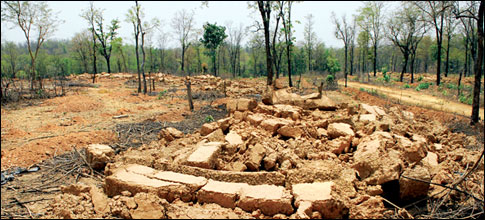
I know this part of India well and before my eyes, I have seen some of India’s most precious forests sacrificed to satiate political expediency using mistaken notions of tribal rights as a fig leaf to exchange land for votes. On a site visit to the same area 10 years later, I found myself speechless at the sheer destruction. In a decade, virtually the entire standing forest on the right bank of the Jiya Bharoli river had vanished. In its place were sparse mustard fields and scattered tree stumps that spoke of once-tall hardwoods whose trunk girth would have been three or four metres at the very least.
Similar stories unfold across vast areas of Sonitpur. We had predicted such disaster when the Forest Rights Bill was being debated way back in 2004-05. We asked, at the very least, a consensus be arrived at that individual rights not be included. A leading NGO, Kalpavriksh, amongst the most vociferous supporters of the flawed FRA, agreed with us in principle but went forward with other groups who threw such suggestions to the wind. Today, much too late, Kalpavriksh agrees that a site-specific amendment to Section 3 (1) of the Forest Rights Act (FRA), 2006, should have been made in Sonitpur to roll back the 2005 cut-off date to 1980, “in consonance with the Forest Conservation Act.” Subsequent to that admission, no further action was taken.
As we have seen happen time and again with urban slum rehabilitation and regularisation schemes, the horse had bolted. The barn door was never shut. What ails the FRA?
To begin with, the Act was intended only for tribal communities, but this was later extended to all forest “dwellers”. Second, individual rights trumped community rights which is evident from the statistics taken from the website of the ministry of tribal affairs from the report on FRA implementation. According to these statistics, people are predictably keen to claim individual rights as this enables them to encash real estate and other financial opportunities. Third, no time limit was definitively set. Had a cut-off date been effectively applied, we would not be in a position where even today “deforest, encroach and claim rights” continue unabated because gram sabhas would have finalised all rights within two years. And the date was 1980 in the first version of the bill.
Here is what the learned Supreme Court judges had to say in an order passed in response to Writ Petition(s)(Civil) No(s) 109/2008 and 50/2008.
“Mr Shyam Divan, learned senior counsel for the petitioner placed before us certain statistical data which indicates that as on September 30, 2015, approximately 44 lakh claims for recognition of the rights under the above-mentioned Act and grant of pattas came to be filed before the authorities competent to deal with those claims in various states out of which some of the claims were accepted and some were rejected. From the information placed before this court by the petitioners, it appears, approximately 20.5 lakh claims were rejected in the above-mentioned 44 lakh claims. Obviously, a claim in the context of the above-mentioned Act is based on an assertion that a claimant has been in possession of a certain parcel of land located in the forest areas. If the claim is found to be not tenable by the competent authority, the result would be that the claimant is not entitled for the grant of any patta or any other right under the Act but such a claimant is also either required to be evicted from that parcel of land or some other action is to be taken in accordance with law.”
Nevertheless, encroachers are not being evicted even after their claims have been rejected. What is more, most lands allotted are unfit for agriculture, condemning claimants to work as landless labour on the properties of richer landholders. The allotment of such lands means that the tribal families have to survive on sustenance farming without access to water, sanitation, health, education and medical facilities.
Even today, the cutting of trees continues. None of the cutting was or is legal. The tribals never had and still do not have title to the land. The elephant herds have vanished, but every once in a while, they return to raid crops. As many as 30 were poisoned in Sonitpur by angry farmers. Neither humans nor elephants are safe any longer. The Kameng-Sonitpur Elephant Reserve (KSER) offers refuge to elephants, in a small measure, but almost daily, as a direct result of human interventions, reports of “wild elephant herds creating havoc in Sonitpur,” appear in the media.
The situation is equally distressful in states such as Maharashtra, Jharkhand, Chhattisgarh, Madhya Pradesh, Bihar, Orissa and Andhra Pradesh. Here, too, in order to grow food on forestlands, locals were encouraged to deforest areas with political patronage. The objective is achieved by burning trees and ground vegetation, then planting food crops on the ash-fertilised remains. But, because the vast bulk of the forest nutrients are quickly washed or blown away, such farms are incapable of offering anything more than borderline livelihoods to farmers. This is precisely what gave rise to “marginal farming”, coined by economists to describe millions condemned to penury. Far from creating self-sufficiency, this has ended up eroding India’s food security, in part because downstream farms find themselves deprived of the flood, drought-control and nutrient-spread gifted by upstream forests.
As I write, the discussion seems Daliesque. The FRA provides a 90-day limit for filing claims. The Act was passed in 2005 (Rules in 2007). Can we seriously be discussing new claims even today? Surely we should collectively agree that no limits be allowed or extended under any circumstances? Remember, that our protected area network barely covers three per cent of our land and acts as an insurance against climate change, floods and droughts. Under no circumstances should such lands be open to the claim of any private rights whatsoever. In fact, it is vital that the long-pending rules to define Critical Wildlife Habitats be framed without further delay and that those deemed to be encroachers vacate such biodiverse lands.
Social activists and wildlife groups must both accept that no rights can be championed, nor wildlife saved, if the forests at the centre of the tussle vanish. Social activists talk of “harmonious co-existence”. But I ask — can 6,000 people live in harmony in 600 sq km with 60 tigers and over 600 elephants with the nearest market for forest produce being six km away? Given that the FRA is a reality and without going into the merits or demerits of the legislation itself, I wonder whether it might be possible for those living next to forests to form cooperatives with the singular purpose of restoring eco-systems back to health on their own lands. This may be easier said than done, but it is possible if a basket of benefits can be channelled to communities that opt for eco-system farming, instead of bajra, wheat or paddy. If this is achieved, the answer to the rhetorical question “Can the Forest Rights and Wildlife (Protection) Acts be friends?” might well be “Yes!”. But I am not holding my breath.

The writer is editor, ‘Sanctuary’ magazine

Sunday, December 4, 2016

MASS EXTINCTION

Major extinction events

Although the Cretaceous-Tertiary (or K-T) extinction event is the most well-known because it wiped out the dinosaurs, a series of other mass extinction events has occurred throughout the history of the Earth, some even more devastating than K-T. Mass extinctions are periods in Earth's history when abnormally large numbers of species die out simultaneously or within a limited time frame. The most severe occurred at the end of the Permian period when 96% of all species perished. This along with K-T are two of the Big Five mass extinctions, each of which wiped out at least half of all species. Many smaller scale mass extinctions have occurred, indeed the disappearance of many animals and plants at the hands of man in prehistoric, historic and modern times will eventually show up in the fossil record as mass extinctions.
Ordovician-Silurian mass extinction
The third largest extinction in Earth's history, the Ordovician-Silurian mass extinction had two peak dying times separated by hundreds of thousands of years. During the Ordovician, most life was in the sea, so it was sea creatures such as trilobites, brachiopods and graptolites that were drastically reduced in number.
Late Devonian mass extinction
Three quarters of all species on Earth died out in the Late Devonian mass extinction, though it may have been a series of extinctions over several million years, rather than a single event. Life in the shallow seas were the worst affected, and reefs took a hammering, not returning to their former glory until new types of coral evolved over 100 million years later.
Permian mass extinction
The Permian mass extinction has been nicknamed The Great Dying, since a staggering 96% of species died out. All life on Earth today is descended from the 4% of species that survived.
Triassic-Jurassic mass extinction
During the final 18 million years of the Triassic period, there were two or three phases of extinction whose combined effects created the Triassic-Jurassic mass extinction event. Climate change, flood basalt eruptions and an asteroid impact have all been blamed for this loss of life.
Cretaceous-Tertiary mass extinction
The Cretaceous-Tertiary mass extinction - also known as the K/T extinction - is famed for the death of the dinosaurs. However, many other organisms perished at the end of the Cretaceous including the ammonites, many flowering plants and the last of the pterosaurs.

Importance of mass Extinction events in Evolution

Mass extinctions have sometimes accelerated the evolution of life on Earth. When dominance of particular ecological niches passes from one group of organisms to another, it is rarely because the new dominant group is "superior" to the old and usually because an extinction event eliminates the old dominant group and makes way for the new one.
For example mammaliformes ("almost mammals") and then mammals existed throughout the reign of the dinosaurs, but could not compete for the large terrestrial vertebrate niches which dinosaurs monopolized. The end-Cretaceous mass extinction removed the non-avian dinosaurs and made it possible for mammals to expand into the large terrestrial vertebrate niches. Ironically, the dinosaurs themselves had been beneficiaries of a previous mass extinction, the end-Triassic, which eliminated most of their chief rivals, the crurotarsans.

Causes of particular mass extinctions

Flood basalt events: Eleven occurrences, all associated with significant extinctions. Only five of the major extinctions coincided with flood basalt eruptions and that the main phase of extinctions started before the eruptions.
Basaltic eruptions can have series of interrelated effects. A basaltic eruption could have
1.     produced dust and particulate aerosols which inhibited photosynthesis and thus caused food chains to collapse both on land and at sea
2.     emitted sulfur oxides which were precipitated as acid rain and poisoned many organisms, contributing further to the collapse of food chains
3.     emitted carbon dioxide and thus possibly causing sustained global warming once the dust and particulate aerosols dissipated.
Flood basalt events occur as pulses of activity punctuated by dormant periods. As a result they are likely to cause the climate to oscillate between cooling and warming, but with an overall trend towards warming as the carbon dioxide they emit can stay in the atmosphere for hundreds of years.
It is speculated that massive volcanism caused or contributed to the End-Permian, End-Triassic and End-Cretaceous extinctions.
2. Sea-level falls
Sea-level falls could reduce the continental shelf area (the most productive part of the oceans) sufficiently to cause a marine mass extinction, and could disrupt weather patterns enough to cause extinctions on land. But sea-level falls are very probably the result of other events, such as sustained global cooling or the sinking of the mid-ocean ridges.Sea-level falls are associated with most of the mass extinctions, including all of the "Big Five"—End-Ordovician, Late Devonian, End-Permian, End-Triassic, and End-Cretaceous.
3. Impact events
The impact of a sufficiently large asteroid or comet could have caused food chains to collapse both on land and at sea by producing dust and particulate aerosols and thus inhibiting photosynthesis. Impacts on sulfur-rich rocks could have emitted sulfur oxides precipitating as poisonous acid rain, contributing further to the collapse of food chains. Such impacts could also have caused megatsunamis and/or global forest fires.
The Shiva hypothesis proposes that periodic gravitational disturbances cause comets from the Oort cloud to bombard earth every 26 to 30 million years.
4. Ocean asteroid impact
Carbon Dioxide (CO2) is soluble in sea water and is present in very large quantities. It mostly reports as the bicarbonate radical (−HCO3) which is only stable at temperatures below 50°C.Sea surface temperatures are normally below 50°C, but can easily exceed that temperature when an asteroid strikes the ocean thereby inducing a large thermal shock. Under those circumstances very large quantities of CO2 erupt from the ocean. As a heavy gas, the CO2 can quickly spread around the world in concentrations sufficient to suffocate air breathing fauna, selectively at low altitudes.Asteroid impacts with the ocean may not leave obvious signs, but these impacts have the potential to be far more devastating to life on earth than impacts with land.
5. Sustained and significant global cooling
Sustained global cooling could
·      kill many polar and temperate species and force others to migrate towards the equator;
·      reduce the area available for tropical species;
·      often make the Earth's climate more arid on average, mainly by locking up more of the planet's water in ice and snow.
The glaciation cycles of the current ice age are believed to have had only a very mild impact on biodiversity, so the mere existence of a significant cooling is not sufficient on its own to explain a mass extinction.
It has been suggested that global cooling caused or contributed to the End-Ordovician, Permian-Triassic, Late Devonian extinctions, and possibly others. Sustained global cooling is distinguished from the temporary climatic effects of flood basalt events or impacts.
6.Sustained and significant global warming
This would have the opposite effects:
·      expand the area available for tropical species;
·      kill temperate species or force them to migrate towards the poles;
·      possibly cause severe extinctions of polar species;
·      often make the Earth's climate wetter on average, mainly by melting ice and snow and thus increasing the volume of the water cycle.
It might also cause anoxic events in the oceans.
Global warming as a cause of mass extinction is supported by several recent studies.The most dramatic example of sustained warming is the Paleocene-Eocene Thermal Maximum, which was associated with one of the smaller mass extinctions. It has also been suggested to cause the Triassic-Jurassic extinction event, during which 20% of all marine families went extinct. Furthermore, the Permian–Triassic extinction event has been suggested to have been caused by warming. Human-caused global warming is contributing to extinctions today.
7.Clathrate gun methane eruptions
Clathrates are composites in which a lattice of one substance forms a cage around another. Methane clathrates (in which water molecules are the cage) form on continental shelves. These clathrates are likely to break up rapidly and release the methane if the temperature rises quickly or the pressure on them drops quickly—for example in response to sudden global warming or a sudden drop in sea level or even earthquakes. Methane is a much more powerful greenhouse gas than carbon dioxide, so a methane eruption ("clathrate gun") could cause rapid global warming or make it much more severe if the eruption was itself caused by global warming.
It has been suggested that "clathrate gun" methane eruptions were involved in the end-Permian extinction and in the Paleocene–Eocene Thermal Maximum, which was associated with one of the smaller mass extinctions.
8. Anoxic events
Anoxic events are situations in which the middle and even the upper layers of the ocean become deficient or totally lacking in oxygen. Their causes are complex and controversial, but all known instances are associated with severe and sustained global warming, mostly caused by sustained massive volcanism.
It has been suggested that anoxic events caused or contributed to the Ordovician–Silurian, late Devonian, Permian–Triassic and Triassic–Jurassic extinctions, as well as a number of lesser extinctions. On the other hand, there are widespread black shale beds from the mid-Cretaceous, which indicate anoxic events but are not associated with mass extinctions.
9. Hydrogen sulfide emissions from the seas
During the Permian–Triassic extinction event the warming also upset the oceanic balance between photosynthesising plankton and deep-water sulphate-reducing bacteria, causing massive emissions of hydrogen sulphide which poisoned life on both land and sea and severely weakened the ozone layer, exposing much of the life that still remained to fatal levels of UV radiation.
10. Oceanic overturn
Oceanic overturn is a disruption of thermohaline circulation which lets surface water (which is more saline than deep water because of evaporation) sink straight down, bringing anoxic deep water to the surface and therefore killing most of the oxygen-breathing organisms which inhabit the surface and middle depths. It may occur either at the beginning or the end of a glaciation, although an overturn at the start of a glaciation is more dangerous because the preceding warm period will have created a larger volume of anoxic water
It has been suggested that oceanic overturn caused or contributed to the late Devonian and Permian–Triassic extinctions.
11. A nearby nova, supernova or gamma ray burst
A nearby gamma ray burst at the End-Ordovician extinction would be powerful enough to destroy the Earth's ozone layer, leaving organisms vulnerable to ultraviolet radiation from the sun. Gamma ray bursts are fairly rare, occurring only a few times in a given galaxy per million years.
12. Geomagnetic reversal
Increased geomagnetic reversals will weaken Earth's magnetic field destroy magnetosphere, long enough to expose the atmosphere to the solar winds, causing oxygen ions to escape the atmosphere, resulting in a disastrous drop on oxygen. Additionally, Magnetosphere destruction will cause the earth to be bombarded with Alpha, beta, gamma and X rays, wiping out lives.
13. Plate tectonics
Movement of the continents into some configurations can cause or contribute to extinctions in several ways:
·      by initiating or ending ice ages;
·      by changing ocean and wind currents and thus altering climate;
·      by opening seaways or land bridges which expose previously isolated species to competition for which they are poorly adapted (for example, the extinction of most of South America's native ungulates and all of its large metatherians after the creation of a land bridge between North and South America).
Occasionally plate tectonics creates a super-continent which includes the vast majority of Earth's land area, which is likely to reduce the total area of continental shelf (the most species-rich part of the ocean) and produce a vast, arid continental interior which may have extreme seasonal variations.

Tuesday, November 29, 2016

Chah Bahar, Its significance and the impediments in taking it ahead

Introduction

An India-operated port in Iran's Chabahar would open a gateway for the country to Afghanistan and Central Asia. The port is of strategic importance.
The decision to ink MoU with Iran for expansion of Chabahar Port, after a long delay, opens up major commercial and strategic opportunities for India

Why Chabahar is Crucial ?


1.      Sits at mouth of Strait of Hormuz area. It is at the Junction of shipping, oil trade routes About 100,000 ships sail by yearly
2.      It Connects three regions: Central Asia, South Asia and West Asia
3.      Chah Bahar will foster Closer ties with Iran will allow Delhi to secure cheaper energy imports. Chah Bahar has hold on two-thirds of world oil reserves. Chabahar Port route helps connect India with energy-rich Azerbaijan, Turkmenistan & other central Asian nations. An estimated 17 billion barrels of crude oil passes this way daily.
4.      It Gives India strategic heft in region; helps it bypass Pakistan & build closer ties with Iran and Afghanistan
5.      This route is 40% shorter, 30% less expensive than trade via the Red Sea-Suez Canal-Mediterranean route
6.      In the absence of transit through Pakistan, Iran is India's gateway to Afghanistan, Central Asia, and Russia and beyond and the Chabahar port is the key element in that
7.      The location of the port is significant as It is located barely 72 km away from the deep-sea Gwadar port. Thus Once functional, Chabahar will Offset China's growing influence and reach in the region. will further undermine Gwadar.
8.      While the Chabahar port is essentially meant for commercial purposes and provides transit route to Afghanistan, India Can use the facility to monitor Pakistani & Chinese activities in the India Ocean Region as well as Gulf. It could be convenient location for India to monitor activities of Pakistani Navy
9.      Indian investment in the port would serve as a link to Delaram-zaranj road that India built in Afghanistan. Chabahar port would give New Delhi a base to position itself after international troops withdraw from Afghanistan
10.  India-built Zaranj-Delaram road in Afghanistan will connect to the Chabahar port via Milak. Iran with financial aid from India is upgrading the Chabahar-Milakroad
11.  The Chabahar-Milak-Zaranj-Delaram highway will open up the Indian market to Afghan farm products and other exports. It will also help combat the scourge of illicit drugs production and export and assist the trade, transport and transit network of Iran

Significance of the deal for Afghanistan

1.      Unhindered access to the Indian Ocean
2.      India-built highway will link country to Chabahar port, further trade
3.      Afghanistan hopes to exploit $ltrillion of untapped mineral wealth to earn revenue

Run-Up To The Deal

In 2009, India built a 218 kin long (@$100m) link road from Delaram in western Afghanistan to Zaranj on the Iran-Afghan border to link up with Chabahar port
Zaranj Delaram highway connects with the 2,200 km two-lane metalled road network, known as the Garland Road that connects major cities in 'the country

Rational for indian Investment in Chabahar

An Indian JV company will lease two berths in Chahbahar's Phase-I for 10 years, which could be renewed by "mutual pact". The JV will invest $85.21 m for equipping the two berths further within 12 months.
r        India will invest $85m to build a container terminal & a multi-purpose cargo terminal
r        On May 6, 2015, Union minister Nitin Gadkari signed MoU with Iran to complete this by Dee 2016
r        Iran wants Chabahar to be the third major hub for its petrochemical industries
r        Indian private & public sector entities projected investment worth $22b in the free trade zone area
r        Chemicals, petrochem, steel, fertilizer are major sectors, besides Indian railways likely to invest
r        India was offered the project to develop Chabahar port in 2003 by Iran, intended to be a critical access-point to land locked Afghanistan
r        For Afghanistan, an operational Chabahar route was a better alternative. It would reduce its dependence  on Pakistan - the sole nation providing it access to the sea
r        Pakistan has been reluctant to allow Indian goods to pass overland through its territory
r        The project did not take off over US sanctions against Iran, but India has gone ahead now follwing lifting of the sanctions

Factors that will obstruct  Chabahar in its full development.

Chahbahar has the potential to alter the entire strategic relations of Afghanistan and Iran with India and oil geopolitics of Central Asia. But the path is not going to be easy.
1.          The fate of the Chabahar project will depend on successive governments showing sustained resolve in the face of geopolitical hurdles. The potential spoilers are several.
(a)     For one, relations between Tehran and the West, though vastly improved, remain fraught, with many hardliners in Iran believing the country was short-changed in the nuclear deal that paved the way for an end to sanctions. That, potentially, could lead to tensions
(b)    There could be differences over Iran’s role in Syria and Afghanistan.
(c)     Indian governments will also have to incentivise private corporations for using the Iranian route to transit goods to Central Asia, rather than the fast, cheap networks they now use through Singapore and China.

(d)    Finally, the project can only be successful if Indian manufacturing is globally competitive.